
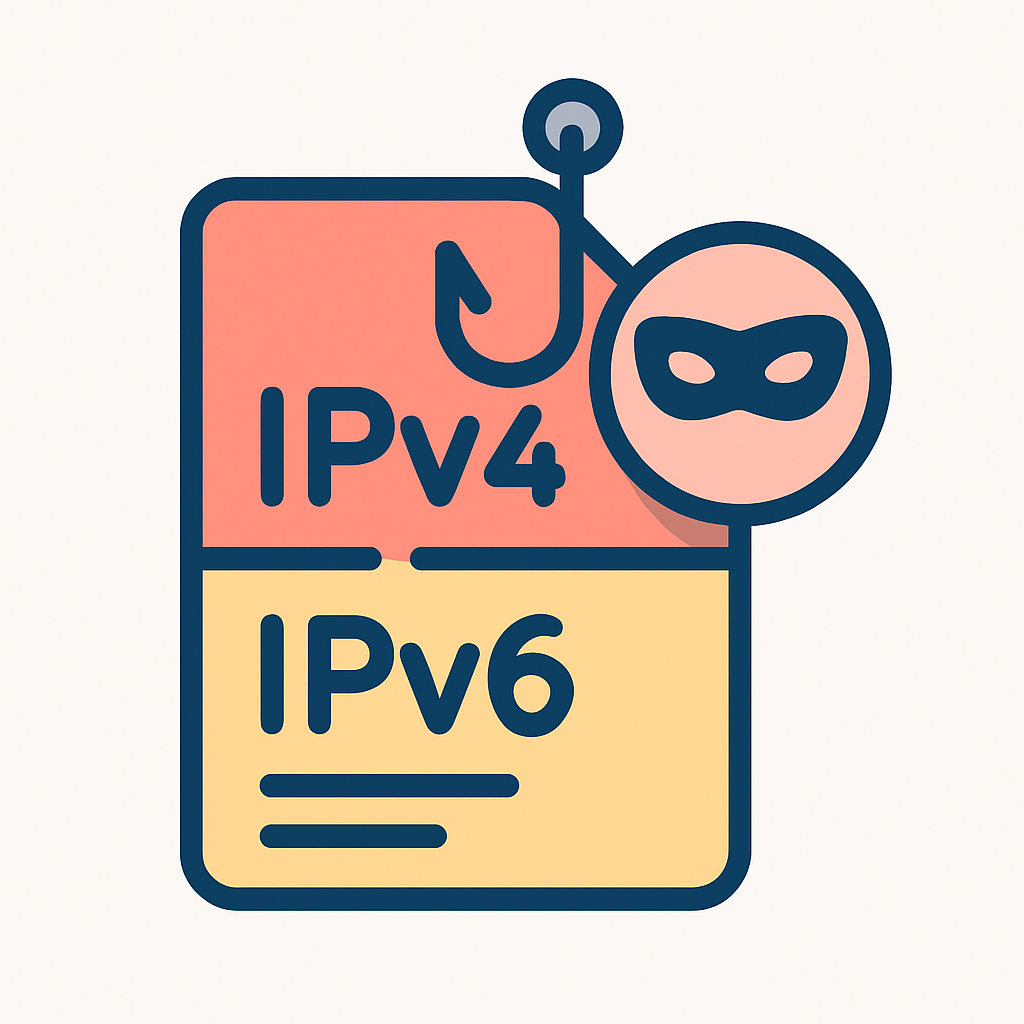
IPv4-mapped IPv6 addresses allow IPv4 hosts to communicate on an IPv6 network by embedding IPv4 addresses within an IPv6 address.
Why It Matters
In the context of phishing and cyber-attacks, IPv4-mapped IPv6 addresses play a significant role in bypassing traditional security measures. With the widespread deployment of dual-stack networks that support both IPv4 and IPv6, these addresses provide cybercriminals an opportunity to obscure operational trails. When a phishing email or related attack vector leverages IPv4-mapped IPv6 addresses, it may not raise immediate red flags since many security devices and log parsers prioritize IPv4. This obfuscation can allow malicious payload delivery or command and control traffic to go unnoticed, providing adversaries enhanced stealth.
Phishers exploit these mixed address formats because they can easily subvert configurations that naively assume IPv6 traffic is less likely to be harmful. Security systems that are not meticulously tuned to scrutinize both IP versions evenly may inadvertently allow unwanted traffic, facilitating attack success. The sheer complexity and larger address space of IPv6 also mean some defensive tools may be under optimized for detecting such abuses.
In Practice
One noteworthy use of IPv4-mapped IPv6 addresses in phishing can be seen in email spam campaigns. Consider a scenario where an attacker sends phishing emails with embedded links using these address formats to bypass security filters. A targeted email might have URLs structured as:
http://[::ffff:192.0.2.128]/phishing_page
When clicked, such URLs direct victims to phishing domains while appearing as legitimate IPv6 traffic at first glance. Many security layers might misprocess this format or lose context during logging.
In another layered attack, a phishing email crafted to mimic internal IT communications might use a subject line like, “Critical Update Required: Action Needed by End of Day.” The allure to click can be amplified through social engineering techniques, and the email contains links leveraging IPv4-mapped IPv6 addresses to avoid detection by automated spam filters.
https://[::ffff:203.0.113.5]/update/login
This link obfuscation adds a layer of legitimacy, especially if combined with HTTPS, making it more likely to trick end users into submitting credentials or downloading malware.
In terms of server logs, an attacker might configure their phishing tools to report access logs with such addresses, thus confusing any defensive team trying to trace the source of phishing operations. A server configuration targeting email redirection may look like:
iptables -A INPUT -s ::ffff:198.51.100.14 -j DROP
This deployment of IPv4-mapped IPv6 both within URLs and log records generates confusion and provides a tactical advantage when obfuscating the origin of attack vectors.
Related Terms
Understanding IPv4-mapped IPv6 addresses also warrants familiarizing yourself with other network-based attack techniques. Consider exploring terms such as IP Spoofing, which deals with forging packet origin, and DNS Tunneling, where DNS requests are manipulated for data exfiltration — both directly affecting network-based security protocols.
References
- Using IPv4-Mapped IPv6 for Malicious Activities: Techniques and Implications
- Evolving Phishing Techniques: How Attackers Use New Technologies
Related Reading
- eBanking Phishing Delivered Through IPv4-Mapped IPv6 Address: Targeting Belgian Bank Clients
- Advanced Techniques in Payload Delivery for Phishing Campaigns: Leveraging VHDX Files
- What is a VHDX File in the Context of Phishing?
- What is PeopleTools in the Context of Phishing?
Educational Purpose: This content is provided for awareness and defensive purposes only. Understanding attacker methodologies helps individuals and organizations protect themselves.