
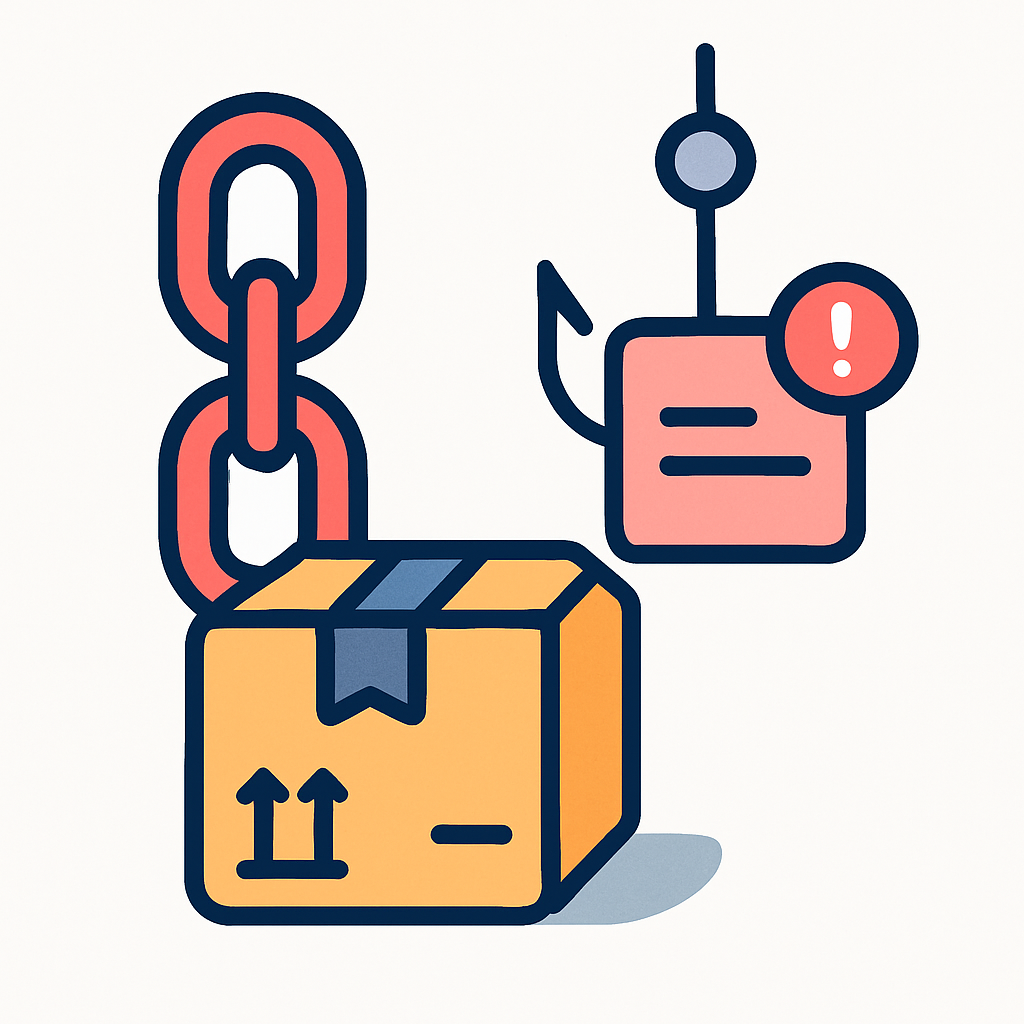
In today’s cybersecurity landscape, the supply chain attack is a formidable technique, especially within the realm of phishing. Attackers leverage vulnerabilities in an organization’s supply chain to distribute phishing emails or other malicious content, targeting not just the primary organization but also its connected vendors, partners, and clients.
A supply chain attack in the context of phishing is the exploitation of vulnerabilities within an organization’s supply chain to deliver phishing emails and other social engineering attacks, extending beyond a single target and affecting multiple organizations connected within the supply chain network.
Why It Matters
The operational impact of supply chain attacks is profound, as they can infiltrate security through trusted sources within an organization’s network. By compromising a less secure vendor or partner, attackers can gain access, often bypassing traditional security measures. This is particularly potent in phishing attacks, where an email appearing to come from a trusted partner is more likely to be opened by the recipient.
For operators running phishing simulations, understanding and simulating this type of attack can demonstrate the real-world risk posed by indirect vectors. It highlights the necessity of considering not just internal security but also monitoring and securing all points of external interaction. Exploiting trust relationships within the supply chain exposes multiple vulnerabilities in one strategic maneuver.
In Practice
Consider a phishing attack where an attacker gains access to a software supply chain. This access might allow them to inject malicious payloads into updates distributed to legitimate end-users. For instance, the attacker could compromise an update server of a widely used B2B software provider. The email accompanying the update might read:
Subject: Urgent Update Required for Your Software


Dear Valued Partner,


We have released an urgent update to address critical security vulnerabilities in your Software X. Please follow the link below to download and apply the update immediately to ensure uninterrupted service.


[download-link-business-software-updates.com]


Thank you for your prompt attention.


Best,

The Software X Team
Within a phishing engagement framework, another realistic example entails attackers leveraging a compromised email account from a supplier to distribute phishing emails. The email account, perceived as legitimate, might read:
Subject: Important: Invoice Due


Hi [Recipient's Name],


Please review the attached invoice due for payment. Let us know if there are any discrepancies.


Regards,

[Compromised Supplier’s Name]
Here, attackers rely on the authenticity of the sender to circumvent email filtering systems and user suspicion. This technique showcases how deeply embedded attackers can exploit trust to execute a successful phish.
A final example might involve a phishing attempt that impersonates a logistics partner. A company expecting details about its shipping may receive an email that carries malware in a disguised attachment:
Subject: Shipping Confirmation for Order #12345678


Dear Customer,


Your order has been processed and shipped. Download the shipment details and tracking information below.


[tracking-link-shipping-confirm.com]


Thank you for choosing our services.


Warm regards,

[Logistics Partner Name]
These examples highlight the potential reach and impact of phishing attacks when they piggyback on trusted relationships within a supply chain.
Related Terms
Understanding a supply chain attack in phishing also requires familiarity with related concepts such as business email compromise (BEC), where attackers infiltrate an organization’s email system to conduct fraud or steal sensitive data. Another relevant term is social engineering, the broader tactic of manipulating individuals into divulging confidential information through human interaction. Lastly, phishing kits, sets of tools and resources leveraged by attackers to create convincing phishing campaigns, are crucial in understanding the logistics behind sophisticated supply chain attacks.
References
- Supply Chain Attacks: Threats and Risks
- Supply Chain Attacks: Unverified Attackers with Trusted Details
Related Reading
- Unpacking the TeamPCP Supply Chain Campaign: Recent Activities and Threats
- Tracking the TeamPCP Supply Chain Attack: Latest Developments
- Pioneering Social Engineering Techniques in Supply Chain Campaigns
- TeamPCP Supply Chain Campaign Targets Multiple Ecosystems
Educational Purpose: This content is provided for awareness and defensive purposes only. Understanding attacker methodologies helps individuals and organizations protect themselves.