
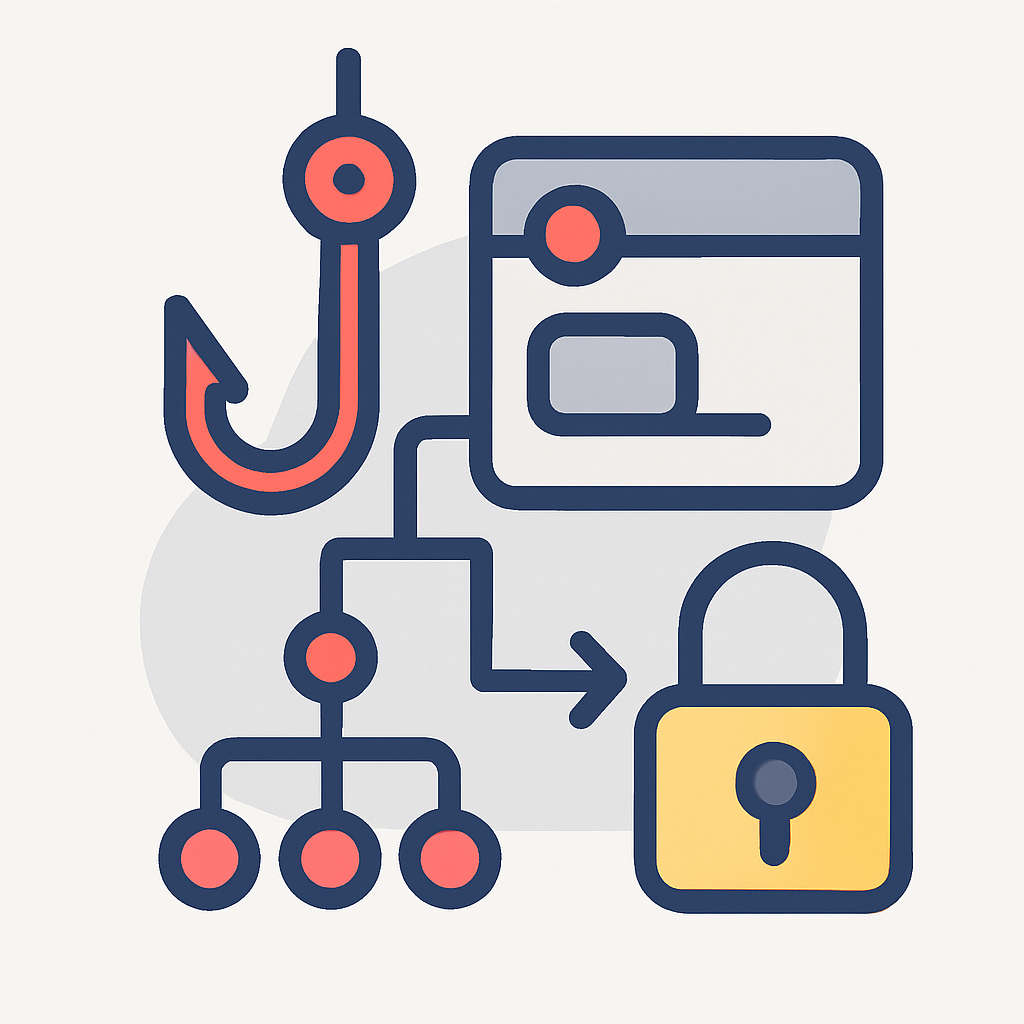
The concept of a kill chain in phishing refers to a structured sequence of stages attackers follow to execute a successful phishing or social engineering attack. These stages typically include reconnaissance, weaponization, delivery, exploitation, installation, command and control, and actions on objectives. Understanding this sequence helps cybersecurity professionals anticipate and disrupt these attacks effectively.
A kill chain in the context of phishing outlines the sequential phases of a cyberattack designed to infiltrate a target system through social engineering tactics.
Why It Matters
In cybersecurity, understanding the kill chain is critical for both attackers and defenders. For red team operators and phishing campaign planners, the kill chain provides a strategic blueprint to plan and execute phishing engagements effectively. By following these structured stages, attackers can systematically map out and execute their plans to extract information or deploy payloads.
For targets, the kill chain represents each phase where they may encounter an attack, from the first deceptive email to potential data exfiltration. For security professionals, dissecting attacks through the kill chain lens helps them dissect where and how their defenses failed, informing strategic improvements to policies and training programs aimed at reducing vulnerability to these stages.
In Practice
- Reconnaissance: An attacker may gather details about employees through LinkedIn, thereby determining who to target with a high-value spear phishing email. For example, knowing that a finance department executive frequently interacts with specific clients could be used to tailor a phishing email that appears as a legitimate invoice request.
- Weaponization: The attacker creates a malicious payload embedded in a seemingly innocuous PDF attachment, crafted to deploy malware once opened. The PDF could be titled “New Company Policies Update.pdf,” misleading the target into opening it.
- Delivery: Phishing emails are sent using a spoofed email address such as HR-Department@bankinggroup.com. The email’s subject line might read “Urgent: Immediate Review of Your Compliance Training Required” to prompt immediate attention and action.
- Exploitation: Upon opening the attachment, a macro within activates, exploiting a known vulnerability like CVE-2017-0199 to execute further payloads silently.
- Installation: The payload installs a backdoor on the victim’s machine, such as Cobalt Strike Beacon, enabling further ingress for the attacker.
- Command and Control (C2): The installed backdoor establishes a connection to a C2 server at http://malicious-actor.com through which the attacker can issue commands and exfiltrate data.
- Actions on Objectives: The ultimate aim may include stealing credentials, exfiltrating sensitive data, or further propagating the attack within the organizational network.
Related Terms
Understanding the kill chain in phishing is deeply intertwined with several other cybersecurity concepts. These include social engineering, where psychological manipulation is employed to trick users into granting access or information. Another closely related term is spear phishing, which refers to highly targeted phishing attacks focused on specific individuals or groups within an organization. Finally, command and control (C2) channels are critical to understanding the later stages of the kill chain, where attackers maintain ongoing access and control over compromised systems.
References
For more comprehensive insights on the kill chain concept and its application in cybersecurity, see the following resources:
- An Introduction to the Cyber Kill Chain
-
Related Reading
- The Role of Perimeter and Endpoint Logs in Phishing Defense
- Reconstructing the Akira Ransomware Kill Chain: A Log Analysis Perspective
- Principles of Campaign Management in Phishing Operations
- What is Privilege Escalation in the Context of Phishing?
Educational Purpose: This content is provided for awareness and defensive purposes only. Understanding attacker methodologies helps individuals and organizations protect themselves.