
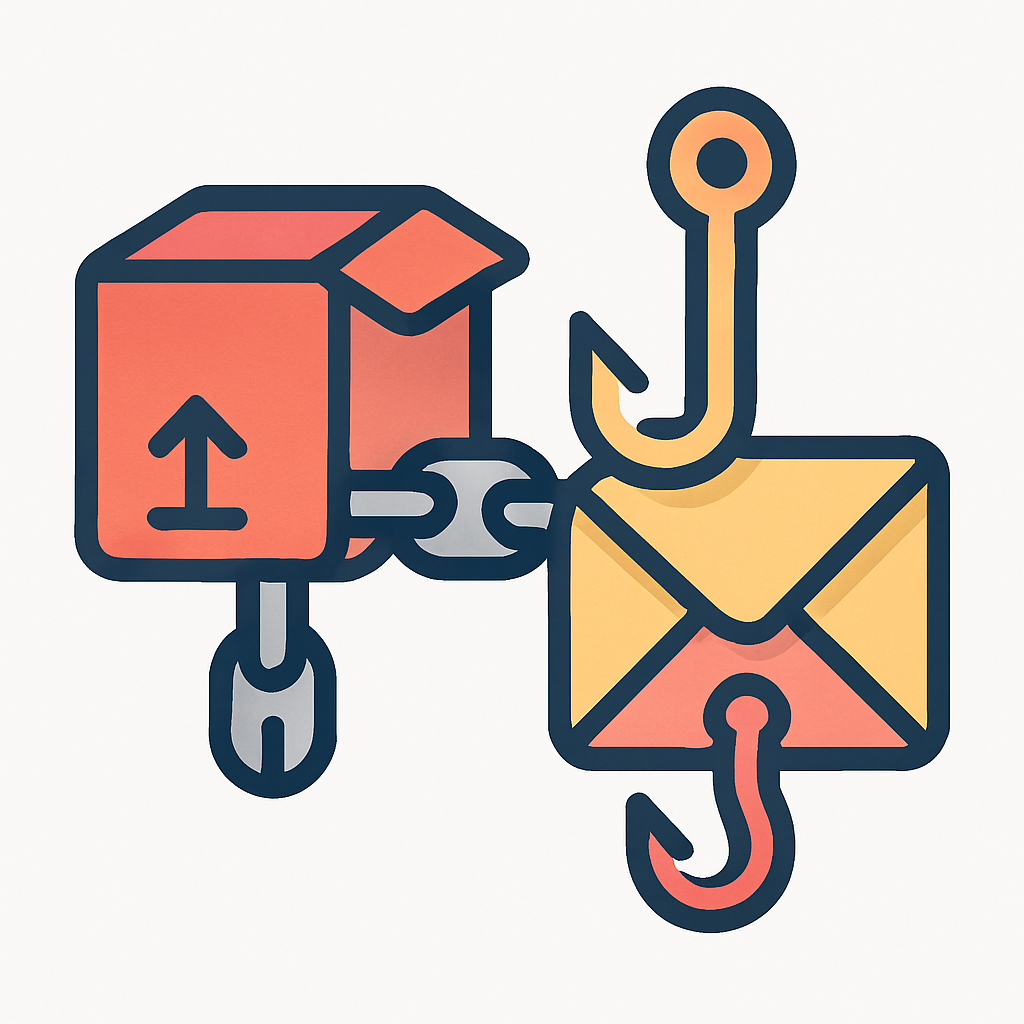
A supply chain attack in the context of phishing is a sophisticated strategy where threat actors compromise third-party software or hardware components used by target organizations, introducing malicious code or trojanized elements to advance phishing or social engineering campaigns.
Supply chain attack: A method of compromising software or hardware components in the supply chain to insert malicious code and facilitate phishing or other attacks.
Why It Matters
Supply chain attacks significantly elevate the threat landscape by targeting the trust relationships inherent in the software and hardware supply chains. For phishing and social engineering operators, these attacks provide a fertile ground by pre-compromising elements that organizations trust implicitly. Infiltrating these channels allows attackers to embed malicious payloads that can later be activated through targeted phishing campaigns. Targets often encounter these compromises through trojanized updates or software installations, making detection challenging and the attack’s efficacy much higher.
Operators utilizing supply chain attacks in phishing campaigns may see various benefits. They can bypass traditional security barriers, exploit pre-existing access privileges, and execute broad, yet surgical attacks aimed at capturing credentials or introducing further malware. By embedding their malicious elements silently into widely-used software, attackers can ensure that multiple targets within an organization effectively receive their payloads unwittingly, increasing the success rate of phishing campaigns exponentially.
In Practice
An illustrative example of a supply chain attack aimed at amplifying phishing efforts involved TeamPCP. Attackers inserted malicious code into a legitimate software update, which organizations relied on for operational continuity. Once the update was deployed, phishing campaigns were triggered, leveraging the compromised software to send legitimate-looking emails from trusted internal addresses, asking users to input their credentials under the guise of a routine password update.
In another instance, a popular document editing software was compromised. Attackers inserted a trojanized component in the document rendering process. Users of this software were subsequently targeted with phishing emails containing documents that, when opened, executed embedded scripts designed to capture keystrokes. A typical subject line for such a campaign was “Re: Quick Review Needed – Earnings Report.docx”, capitalizing on the trust in the familiar software and urgency in business communications.
A third example involved a targeted attack on a cloud service provider, where the attackers managed to infiltrate a software module provided to third-party developers. Once developers integrated the compromised module into their applications, end-users received phishing emails claiming to be routine service notifications, prompting them to click on links that led to credential-stealing web pages. An example of such a phishing email might be, “ALERT: Update Your Security Settings to Continue Using [Service Name].”
Related Terms
Practitioners interested in supply chain attacks should also understand watering hole attacks, which target websites frequently visited by members of a specific group, allowing attackers to plant malicious software on a trusted site. Similarly, they should familiarize themselves with typosquatting, where attackers register domain names similar to those of legitimate services to lure users into entering credentials into fake sites.
References
Understand Supply Chain Attacks and Their Threat to Organizations
Supply Chain Hacks Are Becoming More Common
Related Reading
- TeamPCP Supply Chain Campaign: Expanding Threat Vectors and Strategies
- TeamPCP Supply Chain Campaign Targets Multiple Ecosystems
- What is Package Ecosystem in the Context of Phishing?
- Mechanics of Payload Delivery in Phishing Campaigns
Educational Purpose: This content is provided for awareness and defensive purposes only. Understanding attacker methodologies helps individuals and organizations protect themselves.